# Purpose
The Strategy pattern defines a family of algorithms, encapsulates each one, and makes them interchangeable. It lets the algorithm vary independently from clients that use it.
# Problem
-
Rigid Coupling: Mixing business logic with multiple algorithm implementations.
-
Statism: Inability to cleanly change runtime behavior.
# Solution
Encapsulate each algorithm in its own class (concrete strategy) and delegate its execution from the main class (context).
# Structure
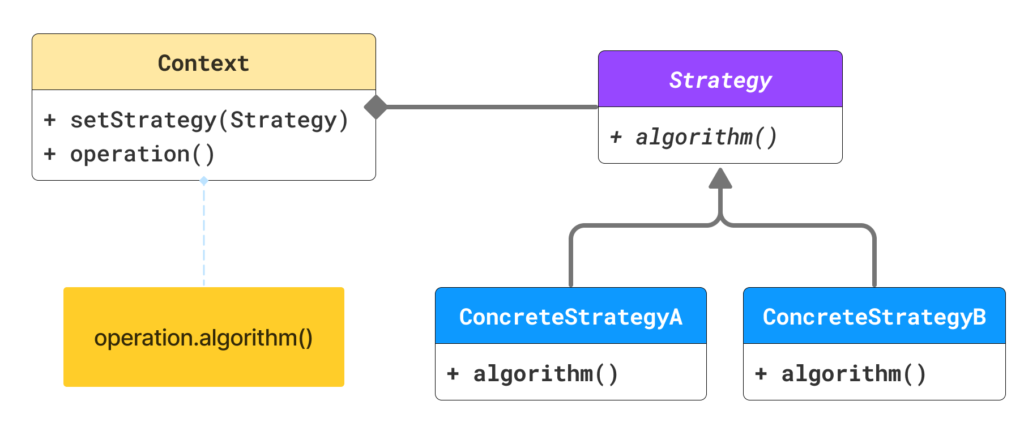
# Participants
- Context: Maintains a reference to the chosen strategy.
- Strategy (Interface): Common interface for all algorithms.
- ConcreteStrategy: Specific implementation of the algorithm.
# When to Use It
When you have multiple ways to perform a task and want to be able to dynamically swap them without
filling the code with if/else statements.
# Advantages
-
verified
Flexibility: Hot algorithm swapping.
-
verified
Isolation: Complex algorithm logic does not pollute the Context class.
# Disadvantages
-
warning
Communication Cost: Overhead when passing data between Context and Strategy.
-
warning
Visibility: Clients must know what strategies exist to choose them.
# Example: Navigation System
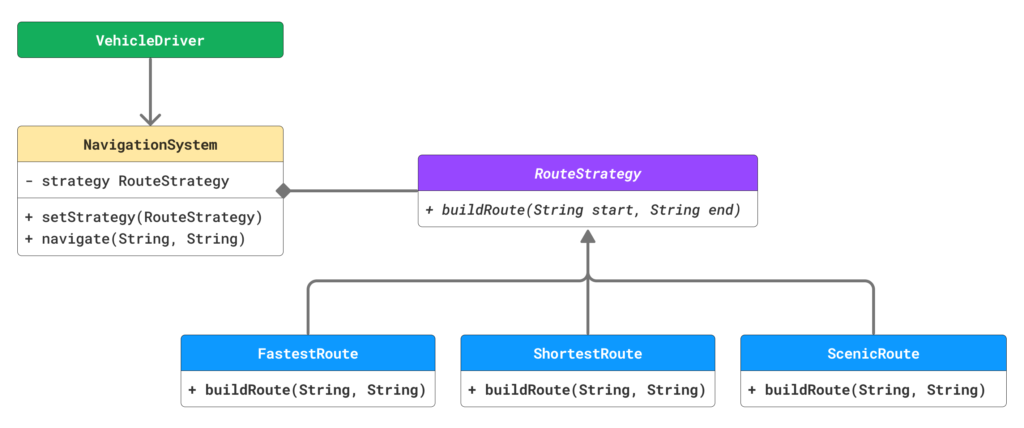
Route calculation: Fastest, Shortest or Scenic. Each is a distinct strategy selected by the user.
# Java Code
interface RouteStrategy { void build(String a, String b); }

class FastestRoute implements RouteStrategy {
    public void build(String a, String b) {
        System.out.println("Fastest route");
    }
}

class NavigationSystem {
    private RouteStrategy s;
    public void setStrategy(RouteStrategy s) { this.s = s; }
    public void navigate(String a, String b) { s.build(a, b); }
}
# Mapping Participants
- RouteStrategy: Strategy Interface.
- FastestRoute/ScenicRoute: ConcreteStrategies.
- NavigationSystem: Context.
# Conclusions
Turns algorithms into modular, isolated, and easy-to-test building blocks.
# Related Patterns
Flyweight
Concrete strategies can be shared if they maintain no state.
State
Both use delegation, but Strategy is a specific choice made by the client.